


 ₹https://tyreshop.bridgestone.co.in/near-me/vijayawada/vinayak-theatre-service-lane/bridgestone-select-bright-blue-wheels-in-vinayak-theatre-service-lane-vijayawada--13Zpak/articles/exploring-the-various-types-of-car-tyres-and-how-t--8236df27-ecf3-4f15-b51f-04812b93ef34
Bridgestone Select - Bright Blue Wheels, Vinayak Theatre Service Lane, vijayawada
Tyre Store in Vinayak Theatre Service Lane, Vijayawada, Andhra Pradesh
Door No 52-1/3-1A, Ground Fllor, Veterinary Colony Road No 2, Nearby Brilliants High School, Vinayak Theatre Service Lane, vijayawada, andhra pradesh - 520008
Request A Call Back
Bridgestone Select - Bright Blue Wheels Social Feeds in Vinayak Theatre Service Lane, vijayawada
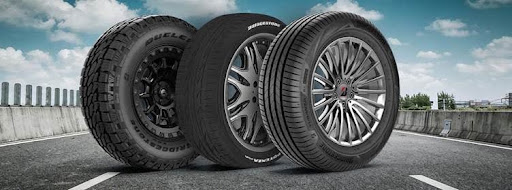
Exploring the Various Types of Car Tyres and How They Impact Performance
Types of Tyres for Cars
Construction Types
Tyres are primarily classified by their internal construction, which affects performance, comfort, and durability.
a) Radial Tyre
Radial tyres have their ply cords/body ply arranged radially (radial direction), at 90° to the direction of travel. This design allows the sidewalls to flex independently from the tread, resulting in better comfort, improved fuel efficiency, and a smoother ride. Steel belts used in radial tyres offer better puncture resistance than the bias tyre. Radial tyres also dissipate heat more effectively, making them ideal for high-speed driving and long-distance travel, hence they are standard in most passenger cars today.
b) Bias Tyre
Bias-ply (or cross-ply) tyres have layers of ply cords crisscrossed at angles, typically 45° to the direction of travel. However, bias tyres generate more heat, offer less flexibility, and provide a harsher ride compared to radial tyres.
2. Air Retention Types (Tubeless & Tube-Type Tyres)
a) Tubeless Tyre
In a Tubeless tyre, the tube is integral within the tyre known as the inner liner. Tyres are fitted without a tube and the inner liner plays a crucial role in maintaining the tyre's shape and ensuring it holds air pressure adequately. In tubeless tyres, the valve is connected to the wheel itself, allowing for more efficient air pressure control.
Tubeless tyres ensure slower air leakage (in case of a puncture, the air escapes gradually), deliver better fuel efficiency, improve heat dissipation, and allow easier repairs, making them safer and more reliable. That’s why they have become the standard fitment in most new cars.
b) Tube-Type Tyre
Tube-type tyres come with the tube. The tube plays a crucial role in maintaining the tyre's shape and ensuring that it holds air pressure adequately. During the mounting process, the tube is inserted into the tyre and then fixed onto the wheel.
In tube-type tyres, the valve or nozzle is connected to the inner tube, forming an integral part of the tube.
3. Usage Types
Standard Tyres
Ideal for: Urban, semi-urban drivers and rural drivers on paved or semi-paved roads
Standard tyres are designed to deliver reliable performance across typical road conditions, smooth city roads, occasional highway stretches, and light monsoon rains. They offer a balanced mix of grip, durability, and comfort, making them ideal for daily commuting and regular urban driving.
Benefits:
Balanced grip and fuel efficiency
Extended tyre life
Better Durability
Performance Tyres
Perfect for: High-speed enthusiasts
If you often drive on expressways or own a high-powered vehicle, performance tyres are designed for superior handling, precise steering, and stability at higher speeds.
Benefits:
Enhanced cornering and braking
Excellent grip at high speeds
Responsive steering feel
Touring Tyres
Perfect for: Highway travellers and road trippers
Touring tyres are designed for comfort, quietness, and long-distance durability. These are the tyres to go for if you frequently drive across states or love long weekend getaways.
Benefits:
Quiet, comfortable ride
Excellent mileage
Consistent performance over long distances
Off-Road & SUV Tyres
Perfect for: Adventure seekers and rural commuters
Whether you’re exploring Ladakh or navigating village trails, off-road tyres offer the ruggedness you need. These tyres are built tough with reinforced sidewalls and aggressive tread patterns.
Benefits:
High durability on rough terrain
Excellent traction & grip on gravel, mud, or sand
Strong sidewall protection
4. Run-Flat Tyre (Technology)
Run-flat tyres allow you to keep driving (typically up to 80 km at a speed up to 80 km/h*) even after a puncture or air loss. It’s ideal for cities or highways where finding immediate roadside help might be difficult.
Benefits:
Drive to safety even after a puncture
No need to carry a spare tyre
Increases boot space
Disclaimer:
● Images (s) shown are for illustrative purposes only. Actual product specifications, including tyre size and design, may vary.
● The information provided is for general guidance only. The author assumes no responsibility for errors or omissions, or for any consequences resulting from the use of this information.